
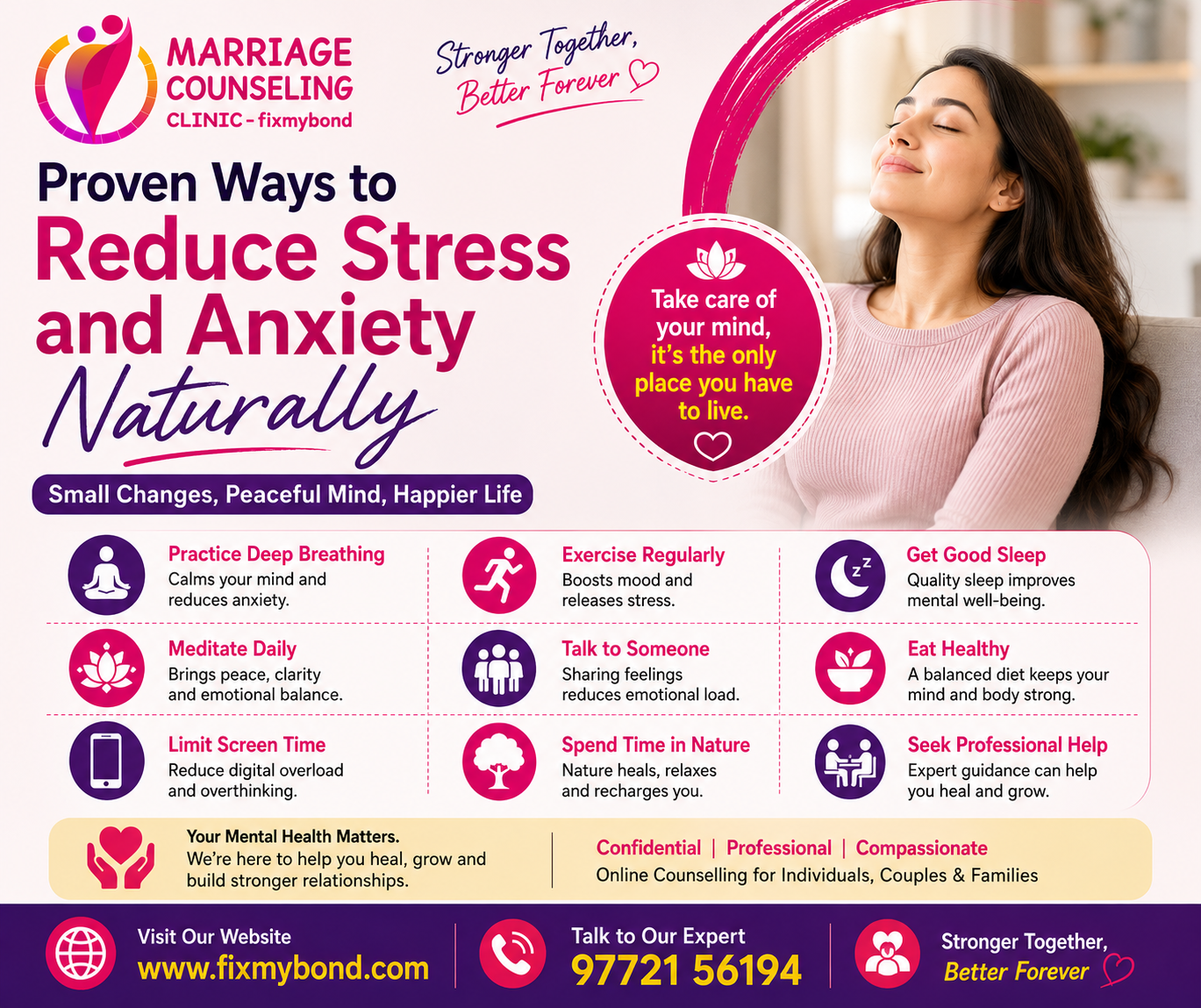
Proven Ways to Reduce Stress and Anxiety Naturally
Stress and anxiety are becoming widespread issues that affect people of all ages in today’s fast-paced world. Many people find it difficult to maintain emotional equilibrium due to a variety of factors including societal expectations financial concerns relationship problems work pressure and health challenges. Chronic stress can have detrimental effects on relationships mental and physical health and general quality of life if left untreated.
The good news is that with the correct techniques, wholesome routines and emotional support stress and anxiety may be effectively managed. The first step to leading a happier and healthier life is learning how to naturally reduce stress and anxiety.
Understanding Stress and Anxiety
The body’s normal response to difficult circumstances is stress. Conversely anxiety is a sensation of fear, trepidation or concern over what might happen in the future. While occasional stress is common persistent anxiety can have an impact on day to day functioning and mental health.
Typical signs of worry and stress include:
- Overanalyzing and worrying all the time
- Having trouble falling asleep
- Mood swings and irritability
- Rapid heartbeat
- Weariness and low vitality
- Having trouble focusing
- Tension in the muscles
- Being overtaken emotionally
Both physical and mental health may be impacted if these symptoms persist for an extended period of time.
What Causes Stress and Anxiety?
People suffer stress and anxiety for a variety of reasons. Among the most typical reasons are:
Pressure at Work
Mental strain and emotional tiredness are frequently brought on by long workdays deadlines, and job instability.
Relationship Issues
Anxiety levels might be raised by marital disputes poor communication emotional distance or family hardship.
Stress related to money
Controlling spending debt or financial instability can lead to ongoing anxiety and mental strain.
Comparison and Social Media
Stress emotional discontent, and low self-esteem might result from comparing your life to others’ online.
Health Issues
Anxiety disorders can be exacerbated by bad lifestyle choices dread of illness or chronic illness.
Insufficient Emotional Assistance
Stress might be more challenging to manage if one feels emotionally detached or alone.
How Stress and Anxiety Affect Mental Health
The body and brain are impacted by unmanaged stress in a number of ways. Emotional exhaustion, sadness panic attacks low self-esteem and relationship problems might result from it. Additionally stress impairs immunity and raises the risk of conditions including high blood pressure heart disease and digestive disorders.
Stress makes it difficult for people to communicate effectively, which can cause miscommunication and emotional detachment in relationships. For this reason emotional wellness assistance and mental health therapy are becoming more and more crucial.
Effective Ways to Reduce Stress and Anxiety Naturally
1. Practice Deep Breathing
Exercises involving deep breathing can rapidly lower anxiety and soothe the nervous system. Every day dedicate five to ten minutes to practicing deep calm breathing.
A straightforward approach:
- Take a slow four-second breath.
- Hold for four seconds.
- Breathe out for six seconds.
This method instantly calms the body and mind.
2. Maintain a Healthy Sleep Routine
Emotional instability and stress hormones are increased by sleep deprivation. Attempt to:
- Get seven to eight hours of sleep every day.
- Avoid using a phone right before sleeping.
- Establish a peaceful sleeping space
- Adhere to a set sleep pattern
Emotional equilibrium and mental clarity are enhanced by adequate sleep.
3. Exercise Regularly
Endorphins which naturally elevate mood and lower stress are released during physical activity.
The best workouts to reduce stress:
- Walking yoga meditation cycling stretching and dance exercises
- Exercise even for 30 minutes a day can greatly lessen the symptoms of anxiety.
4. Reduce Negative Thinking
One of the main causes of worry is overthinking. Learn to confront negative ideas and swap them out for realistic upbeat ones.
Rather than thinking:
This is too much for me to bear.
Try:
I will take care of this step by step.
Confidence and emotional resilience are enhanced by positive self-talk.
5. Practice Mindfulness and Meditation
People who practice mindfulness are better able to focus on the here and now rather than thinking about the future.
Advantages of meditation
- lessens anxiety
- enhances emotional regulation
- improves focus
- encourages inner tranquility
Even ten minutes a day of meditation might enhance mental health.
6. Talk to Someone You Trust
Emotional weight can be lessened by discussing feelings with family friends or counselors.
Many suffer in silence out of fear of being judged. Open conversation fosters emotional support and aids in stress relief.
7. Limit Social Media Usage
Anxiety can be exacerbated by excessive social media use particularly when users are continuously comparing themselves to others.
Take regular vacations from digital platforms and concentrate on peaceful joyful activities in real life.
8. Eat a Balanced Diet
Mental health is directly impacted by nutrition. Mood swings and stress can be exacerbated by unhealthy eating habits.
Include:
- Fresh produce
- Green veggies
- Seeds and nuts
- Foods high in water
- Meals high in protein
Steer clear of processed meals sweets and caffeine in excess.
9. Spend Time in Nature
The mind is calmed by nature. Spending time outside can enhance emotional health and lower stress hormones.
Gardening strolling through parks or just lounging in the sun can all naturally elevate mood.
10. Seek Professional Counseling
Professional counseling can assist in determining the underlying causes of stress and anxiety and offer techniques for emotional healing if they become too much to handle.
Psychologists mental health professionals and relationship counselors employ treatments such as:
Cognitive behavioral therapy or CBT
NLP methods
Therapy for emotional healing
Counseling for couples
Sessions for stress management
People can create healthier coping strategies with the assistance of a professional.
Importance of Emotional Wellness
Avoiding stress is only one aspect of emotional wellness. It is about developing good coping mechanisms for emotions. Strong emotional well-being:
- Overcome obstacles more effectively
- Create more wholesome connections
- Effectively communicate
- Become more self-assured
- Keep your mind in balance.
Maintaining mental well-being is just as crucial as maintaining physical fitness.
When to Seek Help for Anxiety
You ought to get expert assistance if:
- Everyday existence is impacted by anxiety
- Frequent panic episodes
- Sleep issues persist
- An rise in emotional breakdowns
- Relationships are not doing well.
- You feel depressed or emotionally spent all the time.
Asking for assistance is not a sign of weakness. Support for mental health can positively change people’s life.
Final Thoughts
Although stress and worry are inevitable in today’s world, they should not dictate your level of happiness or mental health. Healthy behaviors optimistic thinking, little lifestyle adjustments and emotional support can have a significant impact.
Recall that recovery requires time. Have patience with yourself and prioritize progress over perfection. Put your mental health first be honest with others and get help when you need it.
Stronger relationships a healthier life and a brighter future are all made possible by a calm mind. You can naturally conquer anxiety and lead a confident balanced and emotionally strong life by using stress management techniques on a regular basis.