
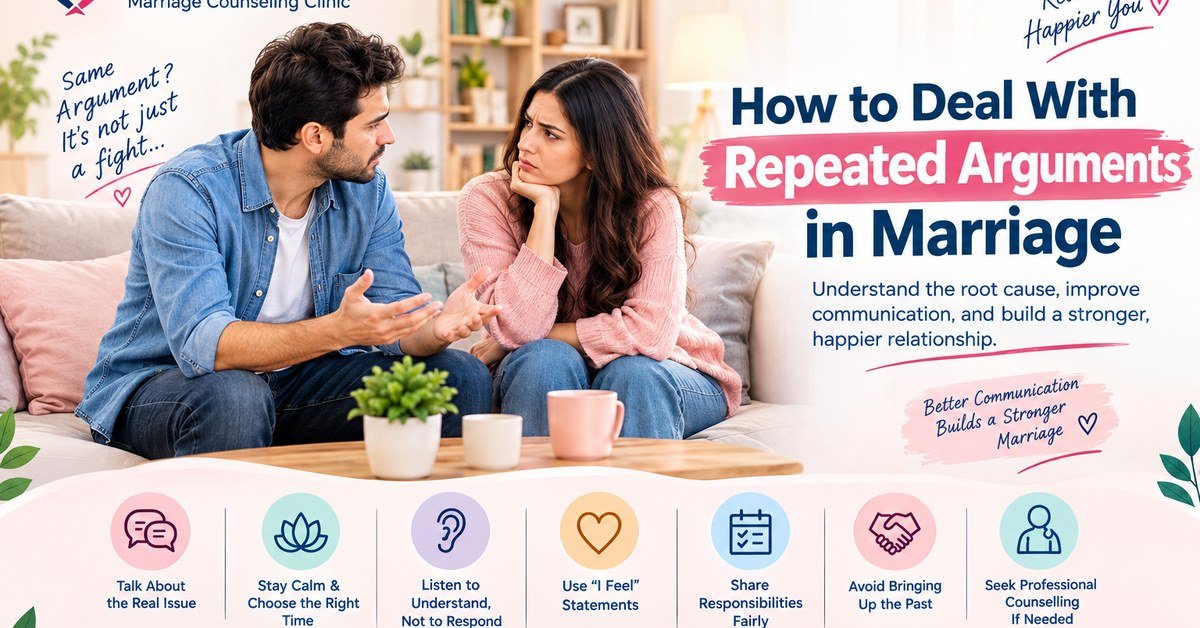
How to Deal With Repeated Arguments in Marriage: A Practical Guide for Couples
Disagreements in marriage are common but repeating the same argument over and over again can make both spouses feel irritated ignored and emotionally spent. Recurring disputes frequently suggest that an underlying issue has not been adequately addressed regardless of the conflict’s subject—household duties money family interference communication or quality time.
Why do spouses keep having the same argument? Because they concentrate on the current argument rather than the feelings expectations or unfulfilled needs that underlie it couples frequently repeat the same arguments. Couples can develop a better relationship by learning to identify these tendencies communicate calmly and collaborate on solutions. When recurring disputes become challenging to settle on your own marriage counseling may also be helpful.
Understand recurring marital conflicts and learn practical ways to build healthier communication.
Why Do My Spouse and I Keep Having the Same Argument?
Repeated arguments often develop when a problem remains unresolved after the conversation ends. One partner may feel ignored while the other feels criticised. Both may believe they have explained their position clearly yet neither feels understood.
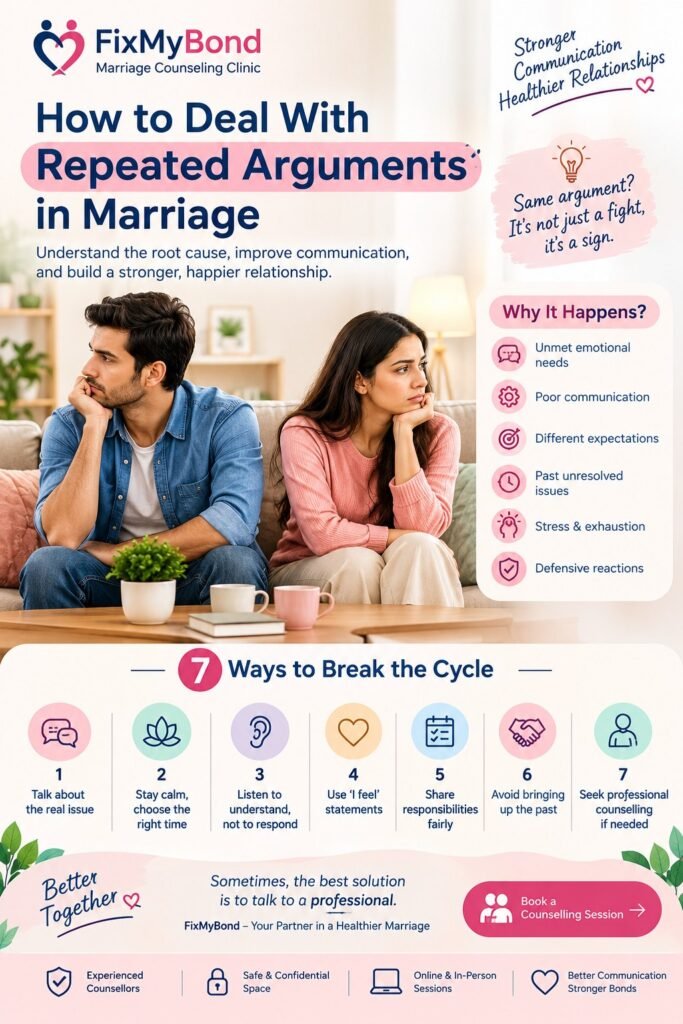
Recurrent marital disputes can be caused by a number of common factors:
Unfulfilled emotional needs: One partner can require more love comfort care or gratitude.
Poor communication: Meaningful interactions can be hindered by blaming, interrupting or making assumptions.
Different expectations: When it comes to money parenting domestic chores and family boundaries spouses may hold divergent opinions.
Unresolved prior issues: New disputes may bring up old disappointments.
Stress and tiredness: Daily obligations, financial worries and work pressure might make one less patient.
Defensive reactions: Partners may prioritize self-defense over mutual understanding when they feel assaulted.
Recognising the reason behind recurring arguments is the first step towards changing the pattern.
What Are the Most Common Repeated Arguments in Marriage?
Even though every relationship is unique many couples have ongoing arguments over related topics.
1. Domestic Duties
While the other partner feels they are making a fair contribution, one spouse may feel they handle the majority of the household chores. The discussion may veer into charges regarding effort or gratitude rather than particular obligations.
What can help: Decide on a reasonable task distribution and create a clear list of shared duties.
2. Financial and Monetary Choices
Tension might arise from disparities in debt financial security, saving priorities and spending patterns. These disputes might be the result of more profound differences in beliefs or worries about the future.
What can help: Arrange for frequent money conversations establish common objectives and decide on spending caps that are convenient for both couples.
3. Insufficient Quality Time
One partner may frequently gripe about the other’s phone use job schedule or lack of attention if they feel neglected. These worries could be seen as criticism by the other partner.
What can help: Schedule regular distraction-free time together and talk about what makes each person feel important.
4. Interference from Family
When parents family or in-laws get involved in personal matters disagreements might occur. Couples may feel torn between their marriage and the expectations of their families.
What is beneficial: Make crucial marital decisions as a team and politely discuss boundaries.
5. Respect and Communication
When partners use harsh language interrupt one another or bring up prior mistakes arguments can become recurrent. A couple’s arguments may eventually cause more harm than the initial issue.
Avoid personal attacks concentrate on one problem at a time and give each partner a chance to share their viewpoint.
How Can Couples Stop Having the Same Argument?
It takes more than just vowing never to dispute again to break a pattern of frequent conflict. Couples want useful strategies to recognize their triggers and react in diverse ways.
1. Determine the True Problem of the Argument
What does the disagreement mean to you? Do you feel unimportant or is it truly about a missed phone call? Is spending money the source of the conflict or are you more concerned with your financial stability?
Consider posing the question What is the most upsetting component of this circumstance for you? to your partner.
You may get over the superficial disagreement by comprehending the fundamental issue.
2. Communicate When Both Partners Are Calm
When either party is upset worn out or overwhelmed difficult conversations are less fruitful. Decide when to resume the conversation after agreeing to take a little break if feelings go out of control.
You should not punish your partner or put off the problem indefinitely by taking a break. When you are both prepared to listen resume the conversation.
3. Instead of placing blame use I Feel statements.
A spouse may become defensive in response to accusations such You never listen to me. Giving a more detailed account of your experience could improve your response.
For instance:
Say something like I feel detached when we do not spend time conversing rather than You always neglect me. Is it possible for us to schedule some time together?
This method expresses your worry without accusing your partner of being the issue.
4. Pay Attention to Understand Rather Than Just React
Instead of paying close attention during a debate people frequently plan their next move. Before outlining your own viewpoint try summarizing what your partner has said.
I understand that you felt unsupported when I made that decision without discussing it with you you may remark. Is it what caused you the most distress?
5. Decide on One Particular Modification
Do not end every conversation with a vague commitment to do better. Instead choose a single doable step that both parties can take.
For instance you could decide to talk about big purchases jointly distribute home chores more explicitly or have a phone-free conversation for twenty minutes every nite.
After a week go over the agreement and talk about what is working. Unrealistic promises are frequently less beneficial than small steady changes.
6. Quit Bringing Every Error from the Past Into the Present
A minor issue might lead to multiple prior complaints when long-standing disputes are not settled. It may be challenging to address any problem as a result.
Try to talk about one issue at a time. Instead of bringing up an old issue during every argument schedule a separate discussion to address it if it still has an impact on your relationship.
When Should You Consider Marriage Counselling?
When the same arguments persist despite repeated attempts to settle them marriage counseling may be worthwhile. When discussions frequently devolve into criticism silence bitterness or emotional detachment it can also be beneficial.
- A licensed marriage counselor can assist couples with:
- Determine the emotional triggers and recurrent conflict patterns.
- Be more polite and explicit when voicing your concerns.
- Recognize various relationship needs and expectations.
- Create more constructive conflict-resolution techniques.
- Resolve unsolved conflicts in a controlled environment.
FixMyBond Marriage Counseling Clinic offers a relationship-focused solution for couples who wish to better communicate and comprehend their problems. While counseling can offer a controlled setting for discussing issues and practicing healthier ways of responding it cannot ensure that every argument will go away.
Seeking support does not have to wait until a marriage reaches a crisis point. It could be simpler to deal with recurrent issues before animosity develops if assistance is received sooner.
Frequently Asked Questions About Repeated Arguments in Marriage
Why do my partner and I continue to argue in the same way?
Because the fundamental issue is still unsolved you can be making the same argument over and over. Familiar conflicts may resurface due to differences in expectations unfulfilled emotional needs communication challenges or lingering animosity.
Is it typical for married couples to have similar arguments?
In marriages occasional recurrent arguments are typical. However it could be beneficial to intentionally address the pattern if disagreements frequently turn harmful negatively impact emotional health or never result in a resolution.
How can I prevent little arguments from turning into major confrontations?
Take your time before responding, talk about one problem at a time refrain from using accusatory language and pay attention to your spouse’s viewpoint. Take a prearranged break and quietly resume the conversation if either person feels overburdened.
Can recurring fights be resolved with marriage counseling?
Marriage counseling can assist couples in identifying problem patterns enhancing communication and creating workable conflict resolution techniques. Individual circumstances and both parties’ desire to participate determine the outcome.
Conclusion
It is not always the case that two people who argue frequently in a marriage are incompatible. They frequently show that a significant issue has not been comprehended effectively conveyed or permanently handled.
Couples can start to stop harmful conflict patterns by recognizing emotional triggers listening without getting defensive setting reasonable expectations and agreeing on doable improvements. Marriage counseling might provide further assistance when the same arguments persist despite earnest efforts.
FixMyBond Marriage Counseling Clinic can be a good place to start if you and your partner are having a lot of disagreements. You can look into relationship counseling and work toward better communication understanding, and a more solid bond.