
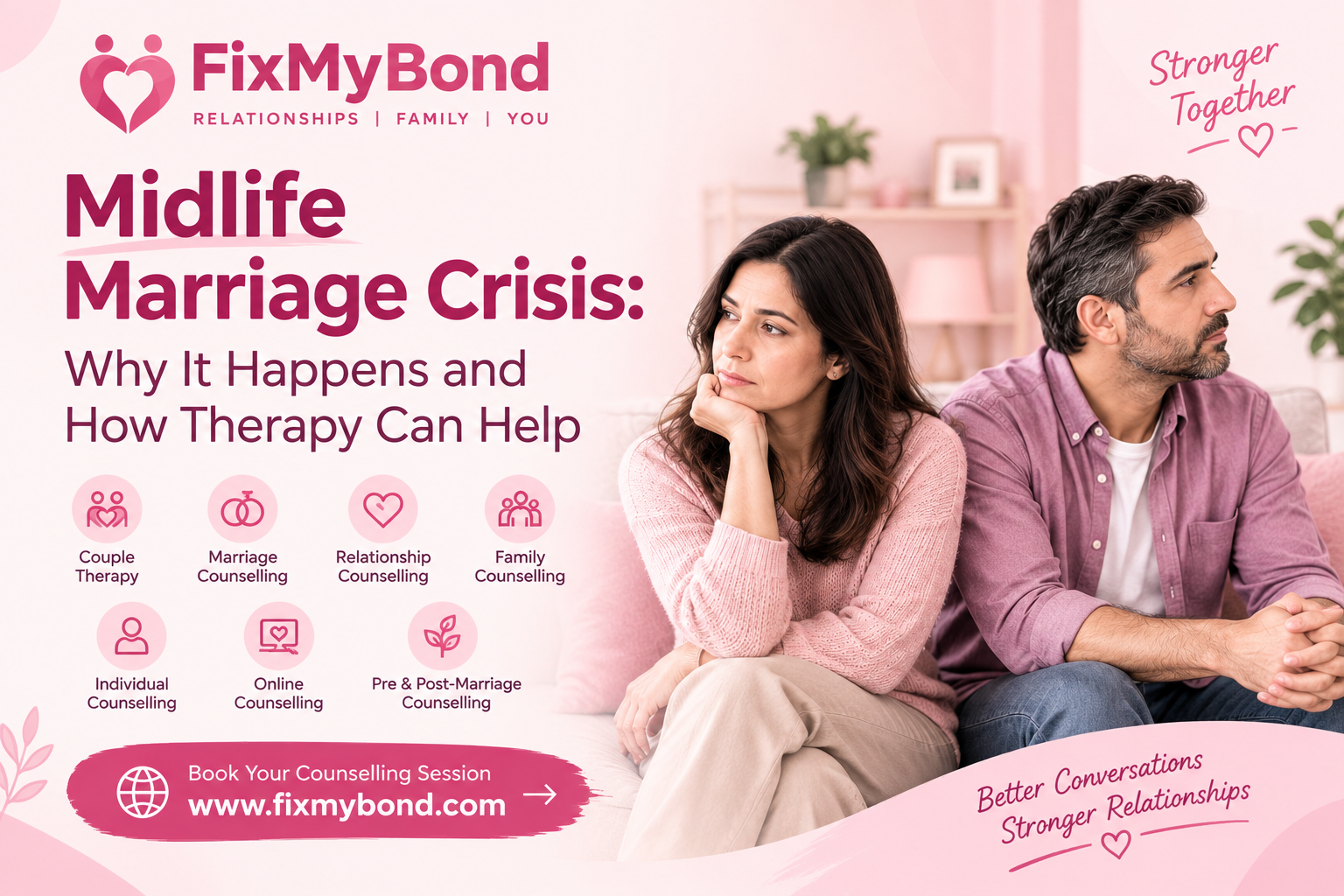
Setting Realistic Expectations for Your Marriage and Communicating Them Effectively
Marriage is a relationship built on love, trust, companionship, communication, and mutual understanding. However, every person enters marriage with certain expectations about how their partner should behave, communicate, support them, and contribute to the relationship. While having expectations is completely normal, unrealistic or unspoken expectations can sometimes become a source of disappointment and conflict.
A healthy marriage does not mean that couples will always agree or understand each other perfectly. Instead, it means learning how to communicate expectations, understand differences, and work together when marriage issues arise. Developing realistic expectations can help couples create a more supportive and emotionally balanced relationship.
1. Why Realistic Expectations Matter in a Healthy Marriage
Expectations influence the way partners perceive their relationship. When expectations are realistic, couples are more likely to appreciate each other’s efforts and accept that both partners have different personalities, habits, emotions, and priorities. For example, expecting your partner to support you during difficult situations is reasonable. However, expecting them to understand every feeling without you communicating it may lead to misunderstandings. Realistic expectations allow couples to recognize that marriage requires continuous effort from both sides. There will be good days, disagreements, stressful situations, and periods when one partner may need more emotional support than the other. Understanding this reality can reduce unnecessary disappointment and help couples approach their relationship with greater patience.
2. Understanding Expectations vs. Reality in Marriage
Many marriage problems begin when expectations are based on assumptions rather than communication. People may enter marriage with an idea of how married life should look, influenced by family experiences, movies, social media, or previous relationships. For instance, someone may expect their spouse to always priorities them, while the other person may believe that maintaining personal space is equally important. Neither expectation is necessarily wrong, but failing to discuss these differences can create emotional distance. The reality of marriage is that two individuals bring their own personalities, backgrounds, habits, values, and communication styles into the relationship. Instead of asking, “Why doesn’t my partner behave the way I expect?” couples can ask, “Have we actually discussed what we both need from this relationship?” This shift in perspective can make communication more constructive.
3. Common Unrealistic Expectations That Cause Marriage Problems
Some expectations may appear small but can gradually create tension between partners. One common expectation is believing that a loving partner should automatically know what you are thinking or feeling. Another unrealistic belief is that couples who truly love each other should never argue. Disagreements are a normal part of relationships. The important factor is how couples handle those disagreements.
Other common expectations include:
- Expecting your partner to always agree with you
- Expecting constant attention and availability
- Believing your partner should solve every emotional problem
- Expecting marriage to remove feelings of loneliness or insecurity
- Expecting one partner to make all the compromises
- Comparing your relationship with other couples
- Expecting your partner to change their personality completely
These expectations can create frustration when reality does not match the imagined version of marriage. Instead, couples can focus on what they can realistically give and receive from each other. If repeated disagreements are becoming difficult to manage, relationship counselling can provide a structured environment where both partners can discuss concerns openly.
4. How to Communicate Your Expectations Clearly
Having expectations is not the problem; failing to communicate them clearly can be. Partners should learn to express their needs directly rather than expecting the other person to guess them. Communication becomes more effective when it focuses on personal feelings and needs instead of accusations. For example, instead of saying, “You never care about me,” a partner can say, “I feel emotionally disconnected when we don’t spend quality time together. I would like us to have some time together without distractions.” This approach reduces blame and gives the other person an opportunity to understand the actual concern. It is also important to listen after expressing your expectations. Healthy communication is not only about being heard but also about understanding the other person’s perspective. A structured couple session can sometimes help partners practice this type of communication when conversations at home repeatedly turn into arguments.
5. Expressing Emotional Needs without Creating Conflict
Emotional needs are an important part of marriage. People may need affection, appreciation, reassurance, respect, emotional availability, personal space, or encouragement from their partners. However, expressing these needs through criticism, silent treatment, anger, or repeated complaints can make communication more difficult. Instead, couples can use simple and specific language. Tell your partner what you need, why it matters, and what kind of support would be helpful. For example, “I need some reassurance when I am stressed” communicates a specific emotional need better than “You don’t understand me.” Partners should also remember that emotional support does not always mean solving a problem. Sometimes listening patiently and acknowledging the other person’s feelings can be equally valuable. When couples struggle to express emotional needs without conflict, couple counselling may help them understand their communication patterns and develop healthier ways of interacting.
6. Managing Different Expectations Between Partners
It is completely normal for spouses to have different expectations. One person may value frequent communication, while the other may need more personal space. One may prefer planning everything in advance, while the other may be more spontaneous. Differences do not automatically mean that a marriage is unhealthy. The goal is not to make both partners identical. The goal is to find mutually acceptable ways of managing differences. Couples can discuss important areas such as finances, family responsibilities, career priorities, household work, social life, personal space, parenting, intimacy, and time together. When expectations are discussed openly, couples can identify areas where compromise is possible and areas where clear boundaries may be necessary. This can prevent small misunderstandings from becoming bigger marriage issues over time.
7. How Marriage Counselling Can Improve Communication
Sometimes couples understand that communication is important but still find it difficult to communicate without arguments. Repeated misunderstandings, unresolved conflicts, emotional distance, trust concerns, or differences in expectations can make conversations increasingly stressful. Marriage counselling provides couples with an opportunity to discuss these concerns in a structured setting. A counsellor can help partners slow down the conversation, identify the underlying concern, and understand how each person’s communication style may be affecting the relationship. A counselling session is not about deciding who is right or wrong. It can help couples understand the issue from both perspectives and work toward practical communication. For couples who want professional support for on-going relationship concerns, FixMyBond best relationship counselling services focus on helping individuals and couples address different relationship concerns through guided counselling sessions.
8. Building Mutual Understanding and Respect in Marriage
Realistic expectations become easier to manage when a relationship has mutual respect. Partners may disagree about many things, but disagreement does not have to result in disrespect. Respect means recognizing that your spouse has their own feelings, opinions, boundaries, responsibilities, and individuality. Couples can strengthen mutual understanding by regularly checking in with each other, appreciating small efforts, spending quality time together, and discussing concerns before resentment builds. It is also useful to appreciate what your partner is already doing instead of focusing only on what they are not doing. A relationship becomes stronger when both partners feel that their efforts are noticed and their concerns are taken seriously.
9. When Communication Problems Need Professional Support
Not every disagreement requires professional help. Couples can often resolve everyday differences through honest conversation, patience, and willingness to compromise. However, professional support may become useful when the same issue keeps repeating despite multiple attempts to resolve it. Frequent arguments, emotional withdrawal, unresolved trust concerns, constant misunderstandings, difficulty communicating, or growing emotional distance can indicate that the couple may benefit from guided support. In such situations, seeking marriage counselling does not necessarily mean that the relationship has failed. It can simply mean that both partners want to understand the situation more clearly and learn better ways of handling it. A professional couple session can provide a neutral space where both partners can express their concerns and listen to each other without the conversation immediately turning into another argument.
10. Creating a Healthy and Realistic Vision of Marriage
A healthy marriage is not a relationship without problems. It is a relationship where partners are willing to understand problems, communicate openly, make reasonable adjustments, and continue working together. Realistic expectations can help couples replace the idea of a “perfect marriage” with a more practical vision of partnership. Love can coexist with disagreements. Personal space can coexist with emotional closeness. Differences can coexist with respect. The most important step is to communicate expectations instead of silently assuming that your partner already knows them. If marriage issues continue to affect communication or emotional connection, professional relationship counselling can help couples explore the underlying concerns in a structured manner. Ultimately, a strong marriage is built through everyday actions: listening, communicating, respecting boundaries, appreciating each other, and being willing to understand the person behind the behavior. Setting realistic expectations is not about lowering your standards; it is about creating a relationship where both partners understand what they need, what they can offer, and how they can grow together.
Why FixMyBond Can Support You through Your Marital Issues
When on-going conflicts, communication gaps, or emotional distance start affecting married life, having the right professional guidance can make it easier to understand the situation and work toward practical solutions. FixMyBond provides structured marriage counselling, couple counselling, and relationship counselling to help couples discuss their concerns in a supportive and confidential environment. Whether you are dealing with frequent arguments, communication problems, emotional disconnection, trust concerns, or other marriage issues, guided counselling can help both partners understand each other’s perspective and work on healthier ways of communicating. FixMyBond focuses on understanding the concerns of both partners rather than simply placing blame. Through individual and joint sessions, couples can get professional guidance based on their specific relationship concerns. If your marriage is going through a difficult phase, seeking timely support can be an important step toward better communication, mutual understanding, and a healthier relationship. FixMyBond can be a supportive partner in your journey toward resolving marital and relationship concerns.