
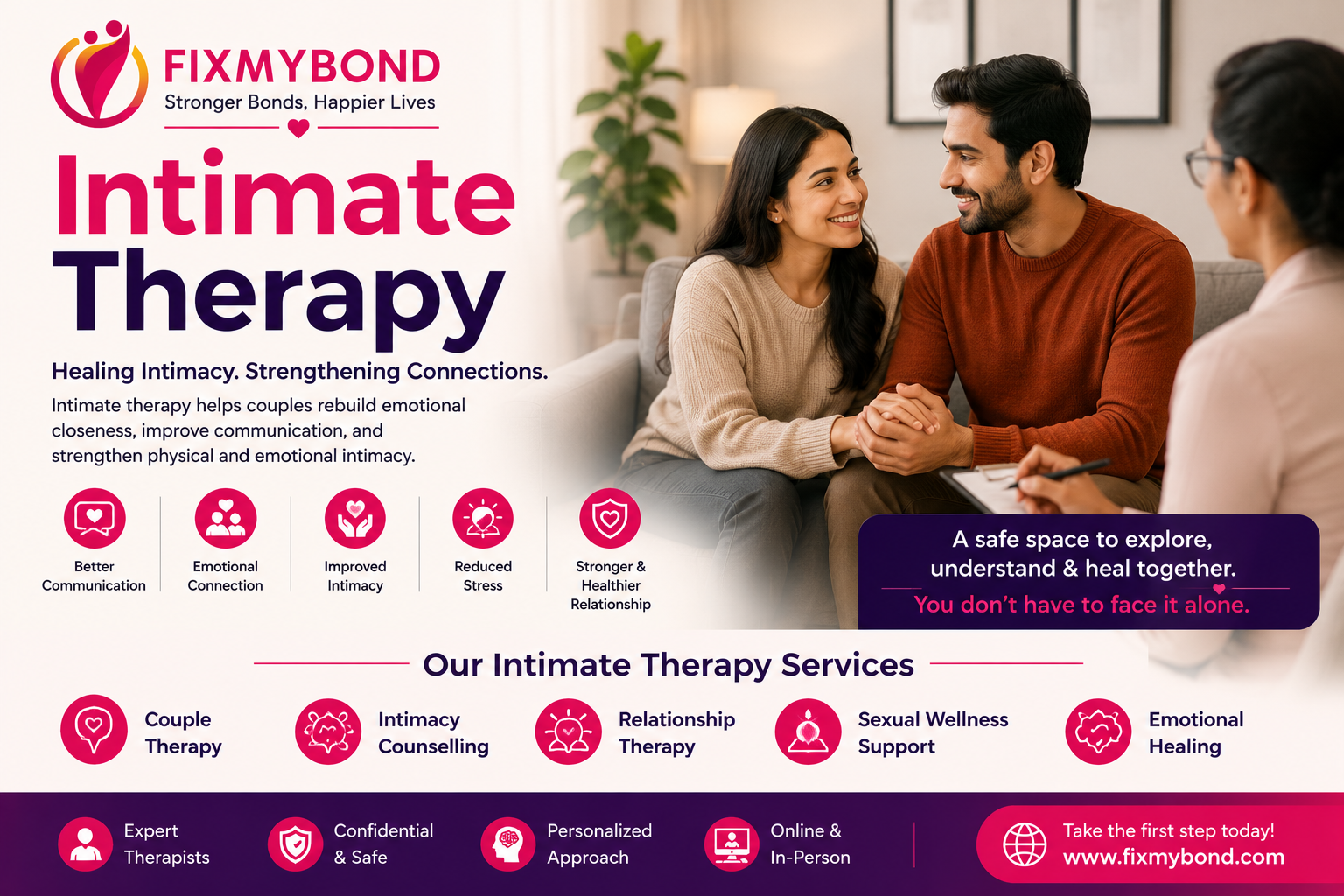
Intimate Therapy Sessions: Healing Connections Rebuilding Trust and Rediscovering Closeness
A sympathetic manual for comprehending sexual therapy couples therapy and emotionally charged sessions aimed at fortifying the relationships that are most important.
Every meaningful relationship revolves around intimacy. However emotional distance communication failures, and unresolved trauma subtly undermine the intimacy that once seemed natural for millions of couples and individuals worldwide. Intimate therapy sometimes referred to as sex therapy relationship therapy or couples counseling provides a controlled caring environment for discussing these issues and starting the healing process.
An intimate therapy session can be a significant turning point whether you are dealing with the fallout from an affair having trouble with low libido feeling emotionally cut off from your partner or just trying to strengthen your relationship.
What is intimate therapy?
The phrase intimate therapy refers to a variety of empirically supported treatment modalities that emphasize both physical and emotional intimacy in partnerships. In contrast to general psychotherapy it focuses on the dynamics vulnerabilities and patterns that influence how two people (or an individual) perceive intimacy desire connection and trust.
Sessions are led in a professional nonjudgmental setting by a licensed marital and family therapist (LMFT) certified sex therapist or psychosexual counselor. The objective is to foster understanding and develop new avenues for connection rather than to place blame. There is more to intimacy than just physical contact. It is the guts to be completely seen and the security to permit it.
Types of intimate therapy sessions
1. Couples therapy and relationship counselling
Couples counseling one of the most popular types of personal treatment focuses on emotional reconnection communication skills and conflict resolution. The number of partners actively seeking treatment is reflected in popular search terms like marriage therapy sessions relationship counseling for intimacy issues and couples therapy near me.
The Gottman Method Emotionally Focused Therapy (EFT) and Imago Relationship Therapy are some of the techniques used by therapists to assist couples in recognizing harmful patterns and creating what experts refer to as a safe attachment bond.
2. Sex therapy and psychosexual counselling
There is no physical contact between the therapist and the client in sex therapy which is a specialized type of talk therapy. A licensed sex therapist assists people and couples with issues like mismatched libidos erectile dysfunction low sexual desire painful intercourse (dyspareunia) performance anxiety and rehabilitation from sexual trauma.
Psychosexual counseling in conjunction with behavioral exercises significantly improves sexual satisfaction and relationship quality for most participants according to research published in the Journal of Sexual Medicine.
3. Emotionally focused therapy (EFT)
One of the most well researched methods in relationship science is EFT which was created by Dr. Sue Johnson. It focuses on recognizing and changing the emotional patterns that keep partners feeling alienated. These patterns are frequently based on attachment theory. Research indicates that EFT can help up to 75% of couples transition from distress to recovery with long-lasting effects.
4. Trauma-informed intimate therapy
Intimacy can be a source of worry and anxiety for people who have experienced sexual trauma emotional neglect as children or abusive relationships. To assist clients in reestablishing a secure relationship with their own bodies and their partners trauma-informed therapists employ somatic approaches EMDR (Eye Movement Desensitization and Reprocessing) and compassion-focused therapies.
What to expect in your first intimate therapy session
Before their first session a lot of people experience anxiety. Knowing what is coming might greatly reduce that anxiousness.
Usually your therapist will start with an initial evaluation to learn more about your past relationships personal health present difficulties and goals. This is a private discussion. Nothing is disclosed without your permission.
Answers are neither correct nor wrong. Building safety and trust is the focus of the first session. The majority of therapists build rapport and mutual understanding before delving into the most challenging subjects.
What a first session usually includes
- Confidentiality agreement and session ground rules
- Personal and relationship history (individual or joint)
- Identifying primary goals what you want to change or heal
- A brief overview of the therapeutic approach your therapist uses
- Space for any questions you have about the process
How to find the right intimate therapist
One of the most crucial stages is to locate a licensed therapist. Look for these credentials while looking for a couples counselor for intimacy issues certified sex therapist or intimate therapy near me:
Seek out therapists in India that have international certifications like AASECT (American Association of Sexuality Educators Counselors, and Therapists) or who are certified with the Rehabilitation Council of India (RCI). People can also connect with licensed professionals through platforms like FixMyBond Vandrevala Foundation YourDOST and iCall.
Worldwide directories like Psychology Today, BACP (UK) and the Society for Sex Therapy and Research (SSTAR) might assist you in finding qualified practitioners in your region or who are accessible for online sessions.
Common myths about intimate therapy debunked
Myth: Physical actions with the therapist are a part of sex therapy. This is completely untrue. Sex therapy is a type of psychotherapy that involves private at-home conversations and occasionally prescribed activities. Legitimate therapeutic treatment never includes physical touch with a therapist.
Myth: Attending requires being in a relationship. People go to intimate therapy by themselves for a variety of reasons, including as resolving issues related to their sexuality and desire healing from previous relationships or getting ready for new relationships.
Myth: Getting therapy indicates that your relationship is not working. In fact seeking therapy is a show of strength and dedication. Couples who seek assistance early on before animosity gets ingrained routinely have much better results according to research.
Myth: Only specific kinds of partnerships are advantageous. People of various genders sexual orientations relationship types (including polyamorous arrangements) and cultural backgrounds can find acceptance and affirmation in intimate therapy.
The science behind why intimate therapy works
Why the relational traumas that intimate therapy treats can be so profoundly felt has been explained by neuroscience. The brain can not readily distinguish between physical pain and rejection or emotional unavailability from a mate.
One way that therapy functions is by making the nervous system feel secure enough to interact in new ways. In particular attachment-based strategies assist partners in transitioning from a threat-response mode (fight flee, or freeze) to what neurologist Stephen Porges refers to as the social engagement system the physiological condition that allows for true connection.
Online intimate therapy: accessibility and effectiveness
Online sex therapy sessions and virtual couples therapy are now commonly available due to the significant growth of online therapy platforms after 2020. For the majority of relationship issues research comparing in-person and teletherapy results indicates comparable efficacy with the added advantages of comfort affordability and decreased stigma.
Online intimate therapy provides a practical and efficient route to expert assistance without geographical restrictions for people living in rural areas with restricted access or in metropolis like Pune Delhi Mumbai or Bengaluru.
When to seek intimate therapy
Before reaching out you do not need to achieve a certain level of distress. However persistent emotional or physical distance that has lasted for weeks or months recovering from an affair or breach of trust navigating a major life transition like parenthood illness, or loss concerns about sexual desire pleasure or function or simply a desire to build a deeper more resilient relationship are common indicators that intimate therapy may be beneficial.
Relational science has long maintained that asking for assistance is not a sign of weakness but rather one of the bravest acts of love we can do.
Counseling for private therapy sessions couples therapy in my area and sex therapy