
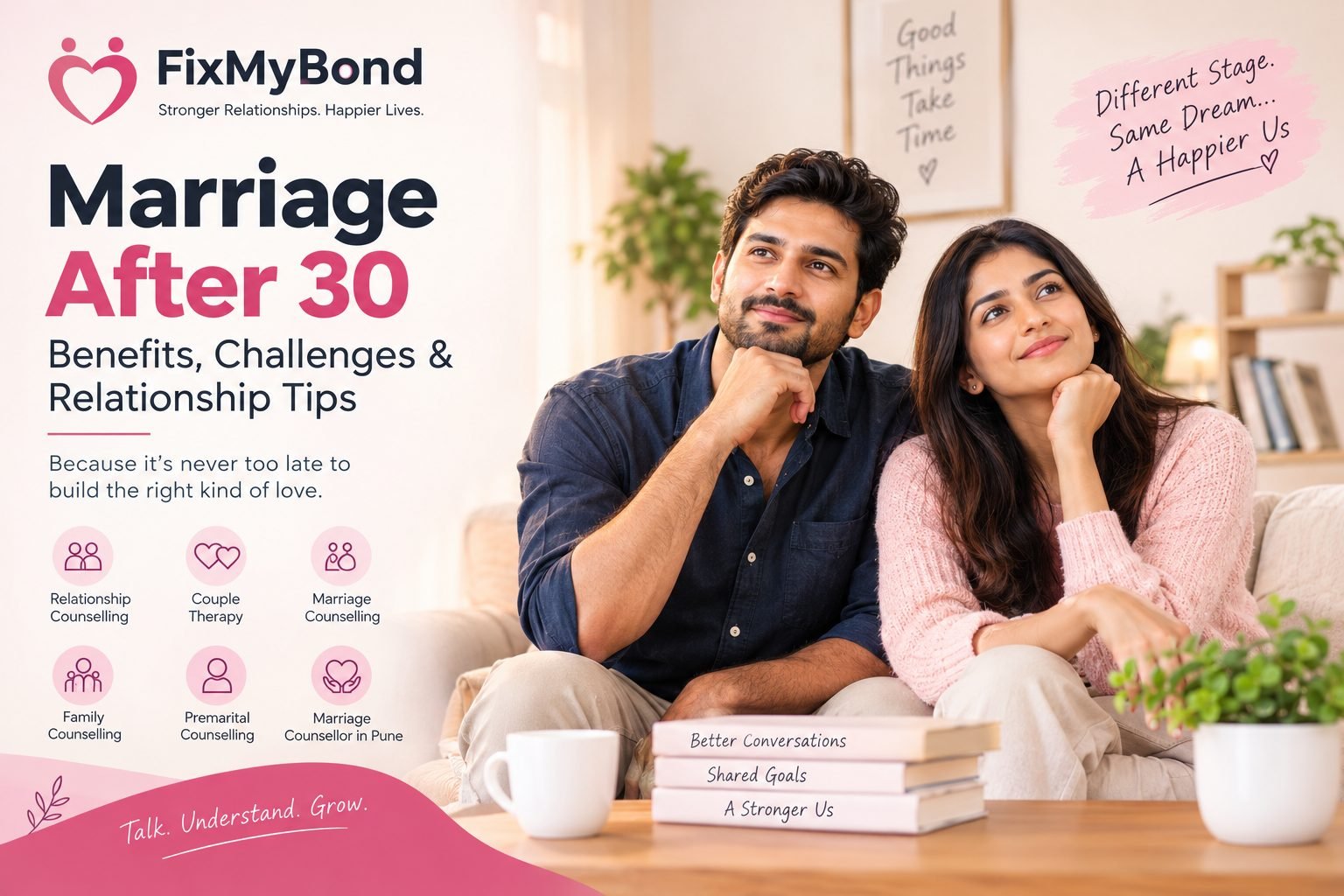
Marriage After 30: What to Know Before Starting a New Chapter
Many people who wish to join a relationship with more self-awareness emotional maturity and a clearer grasp of what they want from life are finding that marriage beyond 30 is a significant option. You may have already gone through significant phases of maturity such as schooling professional development financial obligations friendships and past relationships if you are considering marriage after the age of thirty.
However getting married after 30 can raise additional concerns. You can question whether it is too late to find the ideal spouse whether it will be more difficult to modify expectations or whether starting a family will become more challenging. These worries are reasonable but a person is never ready for marriage at a specific age.
Whether you and your partner are ready to start a life together is more important.
Is Marriage After 30 a Good Idea?
Getting married after the age of thirty is quite acceptable. In actuality a lot of people have a better grasp of who they are and what their priorities are after they get married.
By the time you are in your 30s you could have a clearer notion of what kind of lifestyle you want what values are important to you and what characteristics you value in a spouse. Additionally you might have more experience managing duties and coming to your own conclusions.
Maturity, however does not guaranty a successful marriage. Flexibility respect emotional intelligence and the capacity to have frank conversations about significant issues are still necessary for a happy marriage.
It may be more beneficial to ask the following questions rather than Am I getting married too late?”
Am I picking a relationship that aligns with my desired life?
Why Do People Get Married After 30?
People opt to marry later in life for a variety of reasons.
Before getting married some people choose to concentrate on their studies or careers. Others might have spent years taking care of their families or achieving financial independence. Some individuals may seek extra time before committing to another relationship because they have been in one before.
For some it just takes longer to locate the proper mate.
Additionally rather than adhering to a set timeframe modern relationships allow people to make decisions based on personal compatibility. This means that various people may have very different ideas about marriage at age 30, 32, 35, or later.
It is crucial to avoid comparing your relationship chronology to that of others.
Benefits of Getting Married After 30
Increased self-awareness is one potential benefit of getting married beyond 30.
You may already be aware of your long-term objectives habits strengths and limitations. Conversations regarding marital life may become more meaningful as a result.
- Additionally you might understand:
- Expectations for a career
- Financial obligations
- Preferences for lifestyle
- participation of the family
- Individual limits
- Future objectives
- Expectations for parenting
- Where you wish to reside
- How you like to handle conflicts
Emotional maturity may also be a benefit. You may be able to identify what works and what does not for you if you have encountered a variety of scenarios in your life.
But maturity should not turn into rigidity. While self-awareness is important understanding another person’s viewpoint is also necessary for a good connection.
Challenges of Marriage After 30
There are benefits to getting married later in life but there are drawbacks as well.
The fact that both spouses may already have set routines is one typical challenge. When two independent people move in together their perspectives on money, domestic duties social life family engagement, and personal time may diverge.
It is possible that neither person is entirely incorrect. They might just be used to doing things in a different way.
Expectations from family members can sometimes cause stress. Family friends and social circles may inquire about marriage children and future plans. Making a significant relationship decision based only on outside pressure can lead to needless stress.
Changing expectations can be another difficulty. People may have extremely definite ideas about what their perfect mate should be like after the age of thirty. Standards are good but it might be difficult to identify true compatibility if you want a spouse to share all of your preferences.
What Should Couples Discuss Before Marriage?
You do not have to prepare every aspect of your future when you get married after the age of thirty. But before committing to something long-term there are some discussions that are worthwhile.
Openly discuss expectations for children family obligations living arrangements job goals and money.
Talking about how you both resolve conflicts is also crucial.
Ask one another:
- When we are angry how do we typically respond?
- How should we make financial decisions?
- To what extent should our families participate?
- For each of us what does personal space mean?
- How will we split up the home chores?
- What do we anticipate in terms of professional advancement?
- How should we approach important choices?
- What does each of us consider to be emotional support?
Before getting married these discussions can help couples better understand one another even though they may not always be comfortable.
Can Premarital Counselling Help After 30?
Even in seemingly healthy relationships premarital counseling can be beneficial. It is not limited to couples who are currently dealing with significant issues.
Expectations, communication money family ties future goals and other topics that couples occasionally avoid talking about on their own can all be covered in a premarital counseling session.
Because both spouses may already have established personal and professional lives this can be particularly beneficial for someone thinking about getting married after the age of thirty.
A counselor can assist the couple in examining their differences without escalating them into conflict.
When Should You Consider Marriage Counselling?
Marriage counseling is not limited to couples considering divorce.
When a couple observes frequent arguments emotional detachment or trouble reaching significant decisions jointly they may decide to consult a marriage counselor. Counseling is used by others when they transition into a new stage of married life.
Getting help from a professional does not always indicate that a marriage is failing. It can just indicate that the couple is looking for a better solution to a certain problem.
Marriage After 30 and Finding the Right Partner
It can occasionally feel different to find a companion after 30 than it does to date in your 20s. You might be less interested in relationships that do not have long-term potential and have more precise expectations.
In fact that may be useful.
Consider whether your ideals and long-term expectations are adequately aligned rather than concentrating solely on attraction or social compatibility.
It is not necessary for two people to be the same for a relationship to be successful. Disparities are common. The ability of both parties to accept their differences and work together to make decisions is what counts.
How FixMyBond Can Help
Individuals and couples can get expert assistance for issues pertaining to relationships and marriage at FixMyBond Marriage Counseling Clinic.
Counseling can offer a structured setting for talking about your issues, whether you are getting ready for marriage adjusting to married life or having problems in your relationship.
Depending on the circumstances support may include premarital counseling family counseling couple therapy marriage counseling and relationship counseling.
Determining the ideal nature of your partnership is not the aim. It will assist you in comprehending your circumstances, improving your communication skills and making deliberate decisions on your future.
Final Thoughts
Marriage after 30 is not a deadline you have missed. It is simply a different stage of life in which you may bring more experience independence and self-knowledge into a relationship.
The most important question is not whether you married before or after a particular age. It is whether the relationship allows both partners to feel respected understood and able to grow.