
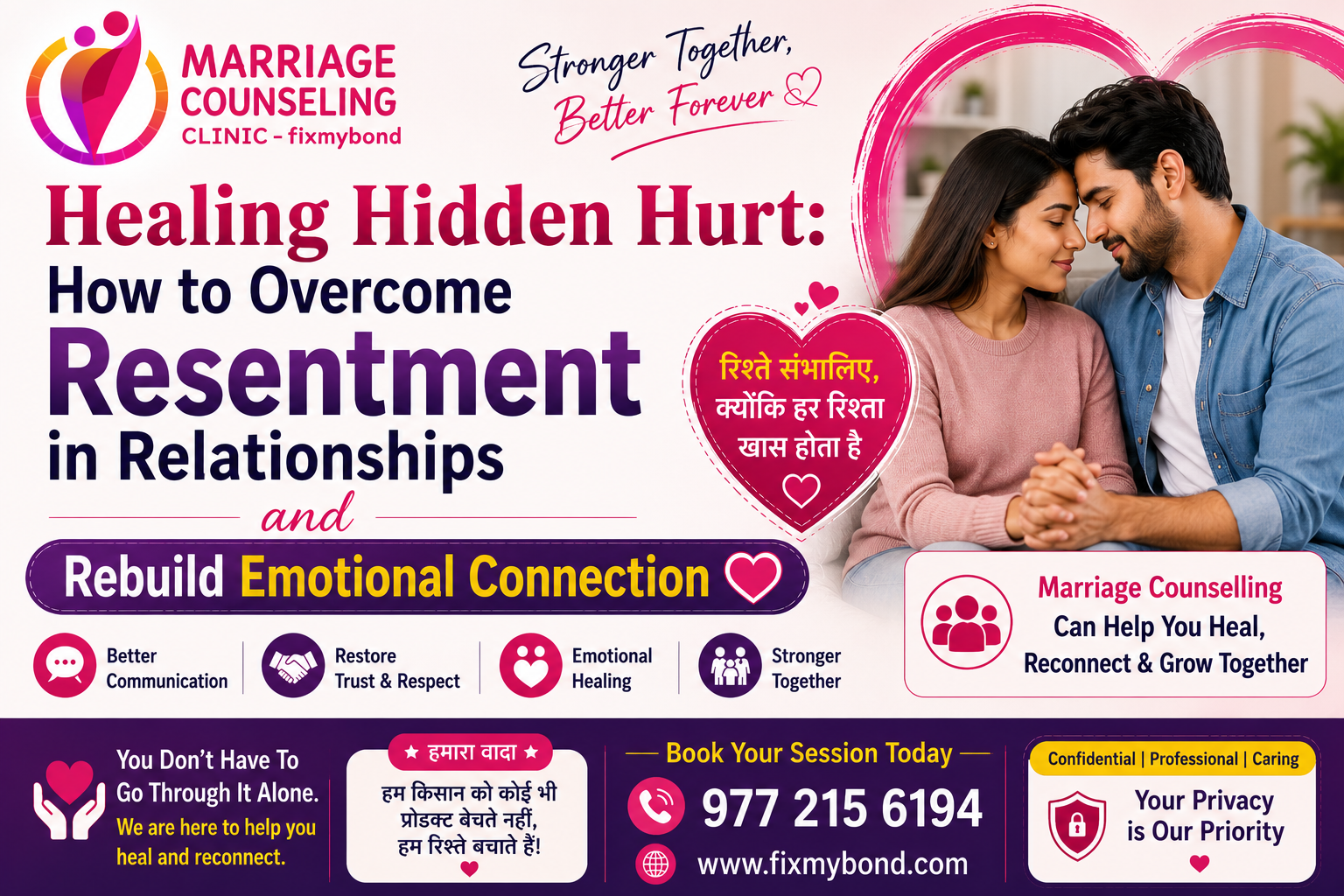
Healing Hidden Hurt: How to Overcome Resentment in Relationships and Rebuild Emotional Connection
Love trust respect and emotional stability are the cornerstones of relationships. However, resentment can gradually develop between spouses when unresolved disputes emotional neglect, recurrent miscommunications or unmet expectations persist over an extended period of time. Because it silently undermines communication, closeness and emotional bonding relationship resentment is one of the most prevalent yet hazardous emotional obstacles in marriages and love relationships.
Unaware of the profound impact it has on their bond many couples suffer from concealed rage. Small setbacks eventually develop into emotional distance annoyance resentment and persistent conflicts. Even the strongest marriages can be weakened by anger if it is not properly addressed.
The good news is that with the correct relationship advice patience understanding and emotional honesty resentment may be healed. The reasons of relationship resentment its emotional impacts and doable strategies for overcoming it and reestablishing trust with your partner will all be covered in this article.
What Is Resentment in a Relationship?
Resentment is a strong emotional emotion that arises when someone experiences long-term suffering neglect undervaluation control or lack of emotional support. Many people repress their suffering instead of talking about it honestly which eventually leads to silent rage and emotional irritation.
Resentment in a relationship frequently manifests as:
- Persistent annoyance with your spouse
- Recurrently bringing up past errors
- Withdrawal of emotions
- Absence of closeness
- Feeling worn out emotionally
- Passive-aggressive conduct
- Loss of regard in the partnership
- Feeling ignored or undervalued
Resentment in marriage often goes unnoticed until communication becomes poisonous or the emotional bond entirely disappears.
Common Causes of Resentment in Relationships
Understanding the root causes is the first step toward healing resentment.
1. Poor Communication
One of the main causes of animosity between partners is poor communication. Emotional frustration develops on the inside when emotions are not communicated.
Couples that steer clear of challenging topics frequently encounter:
- Misunderstandings based on emotions
- Unresolved disputes
- Unspoken rage
- An increase in emotional distance
Emotional accumulation in relationships can be avoided with effective communication.
2. Unequal Efforts in the Relationship
It is possible for one spouse to believe that they are providing more materially emotionally or physically while getting little in return. Feelings of injustice and emotional exhaustion are brought on by this imbalance.
Examples consist of:
- One partner is in charge of everything.
- Absence of emotional assistance
- One-sided agreements
- Experiencing emotional neglect
This imbalance eventually leads to bitterness and unhappy relationships.
3. Broken Trust
Deep emotional wounds might result from interpersonal problems involving trust. Repeated lying emotional cheating, betrayal and dishonesty undermine emotional stability and cause long-lasting resentment.
Emotional suffering can result from even little broken promises that are repeatedly broken.
4. Lack of Appreciation
Everyone wants to feel valued and respected in a relationship. When appreciation disappears partners may begin to feel invisible.
Simple things like:
- Not acknowledging efforts
- Ignoring emotional needs
- Taking your partner for granted
can slowly damage emotional intimacy.
5. Unresolved Past Conflicts
Arguments frequently bring up old emotional wounds that have never fully healed. Because there was never a genuine emotional settlement many couples still argue about the same problems.
Resentment is sustained by clinging to past suffering.
Emotional Effects of Resentment in Relationships
Resentment has an impact on mental and emotional health in addition to the relationship.
Included in the emotional impact are:
- Stress and anxiety
- Feelings of isolation
- Anger management problems
- Relationship depression
- Low self-worth
- Persistent emotional tiredness
- Diminished emotional closeness
Because resentment develops imperceptible emotional barriers many people experience emotional disconnection even when they live together.
Signs Your Relationship Is Affected by Resentment
Early detection of the symptoms can help save the relationship before serious emotional harm occurs.
Typical Signs:
- Frequent disagreements about trivial matters
- Passive-aggressive conduct and sarcasm
- Steer clear of talks
- Absence of physical affection
- Feeling unsafe on an emotional level
- Keeping track of errors
- Emotional detachment
- Being happier when you are not with your partner
Relationship counseling may be required if these symptoms persist for an extended period of time.
How to Overcome Resentment in Relationships
Healing resentment requires emotional effort from both partners. It is not about winning arguments but rebuilding emotional understanding and trust.
1. Acknowledge the Resentment Honestly
Acknowledging the existence of resentment is the first step toward healing.
Refrain from acting as though nothing is wrong while harboring underlying emotional suffering. Healing begins with open emotional honesty.
Instead of placing blame, quietly communicate your emotions:
- I feel ignored on an emotional level.
- When my efforts are not acknowledged I feel offended.
Emotional stress is lessened through healthy emotional expression.
2. Improve Communication Skills
One of the finest ways to resolve marital animosity is through effective communication.
Among the components of healthy communication are:
- Paying attention without interjecting
- Speaking with deference
- Steer clear of accusatory words
- Recognizing emotional needs
- Maintaining composure when arguing
Open communication improves emotional intimacy between a couple.
3. Stop Keeping Score
When partners continually focus on past disagreements faults or sacrifices many relationships become emotionally poisonous.
Statements such as:
- I always take care of everything.
- You never get me.
intensify negative emotions.
When couples choose cooperation over rivalry healing can start.
4. Learn to Forgive Gradually
Forgiveness does not imply instantaneous forgetfulness of suffering. It entails making the decision to pursue emotional recovery rather than harboring resentment all the time.
Forgiveness is beneficial:
- Cut down on emotional strain
- Boost your emotional health
- Slowly rebuild trust
- Bring relationships back to harmony
But forgiveness needs to be accompanied with responsibility and sincere attempts to improve.
5. Rebuild Emotional Intimacy
Emotional distance is caused by resentment. Emotional intimacy needs to be purposefully restored in order to mend the relationship.
Methods for reestablishing an emotional connection:
- Spend time with each other.
- Every day show each other appreciation.
- Regularly show affection
- Engage in meaningful dialogue
- Provide emotional support to one another.
Over time small acts of kindness lead to emotional recovery.
6. Set Healthy Relationship Boundaries
When personal boundaries are consistently disregarded resentment can occasionally arise.
Partners benefit from having healthy boundaries:
- Observe your emotional space
- Steer clear of emotional excess
- Minimize disputes
- Develop respect for one another
In relationships boundaries foster emotional equilibrium.
7. Seek Professional Relationship Counselling
Relationship therapy or marriage counseling can assist couples in reestablishing emotional trust and communication if resentment has become deeply ingrained.
Couples benefit from professional counseling:
- Recognize the emotional triggers
- Boost the ability to resolve conflicts
- Repair emotional injuries
- Restore emotional security
- bolster emotional ties
Asking for assistance is a constructive step in mending relationships not a sign of weakness.
How to Prevent Resentment in Relationships
Healing years of emotional suffering is more difficult than preventing animosity.
Good Relationship Practices
- Communicate honestly
- Regularly show each other appreciation
- Deal with problems early.
- Spend time with each other.
- Be mindful of emotional requirements
- Steer clear of silent treatment
- Be emotionally truthful.
Consistent emotional support and understanding foster strong relationships.
Final Thoughts
Relationship resentment takes time to manifest. Emotional neglect unresolved pain, inadequate communication and a broken emotional connection all contribute to its gradual development. If disregarded it can have a significant impact on relationship satisfaction trust and emotional health.
Relationships however are healable.
Couples can overcome resentment and reestablish a stronger emotional connection by being emotionally honest patient communicating, forgiving and working together. Although there are difficulties in every relationship couples who prioritize understanding over ego frequently develop deeper and more profound bonds.
Do not disregard the warning signs if your partnership seems emotionally detached. Little actions taken now can save greater emotional harm later on.
When both couples choose to listen comprehend and develop together once more healing begins