
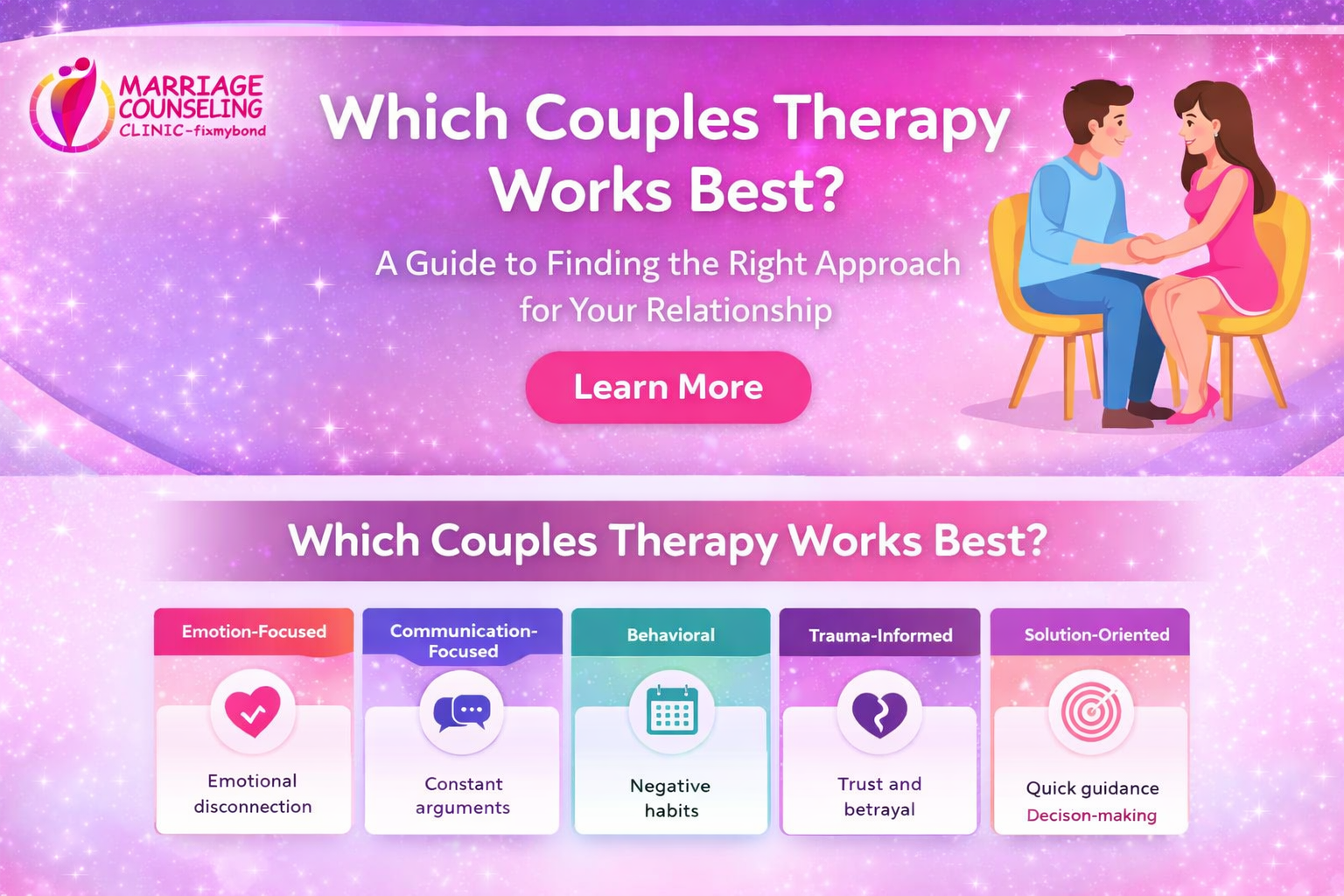
Which Couples Therapy Works Best? A Practical Guide to Finding the Right Approach for Your Relationship
There are stages in every relationship. Some seasons are easy and loving, while others are confusing, far away, or full of frequent arguments. One naturally arises when couples decide to seek help: Which type of couples therapy is best? The honest response is that the best therapy is the one that meets the specific needs of your relationship, not the most popular one. There are a variety of reasons why different couples struggle. Emotionally, some people feel disconnected. Some argue on a regular basis. Some people are recovering from being betrayed. Some people simply believe that they have “grown apart.” The truth about what’s going on beneath the surface determines the best therapy approach. We’ll go over the various types of couples therapy how they work, and how to choose the one that’s right for you in this in-depth guide.
Why Couples Therapy Matters
Understanding what couples therapy actually does is essential before selecting a therapy approach. Couples therapy doesn’t focus on: Choosing who is right and who is wrong blaming a single partner Reconciliation by force It concerns: Recognizing emotional trends Developing better communication skills bringing an end to cycles of conflict Reestablishing security and trust enhancing emotional connection over time Too many couples delay seeking assistance. Problems are easier to solve the earlier you address them.
The Most Effective Types of Couples Therapy
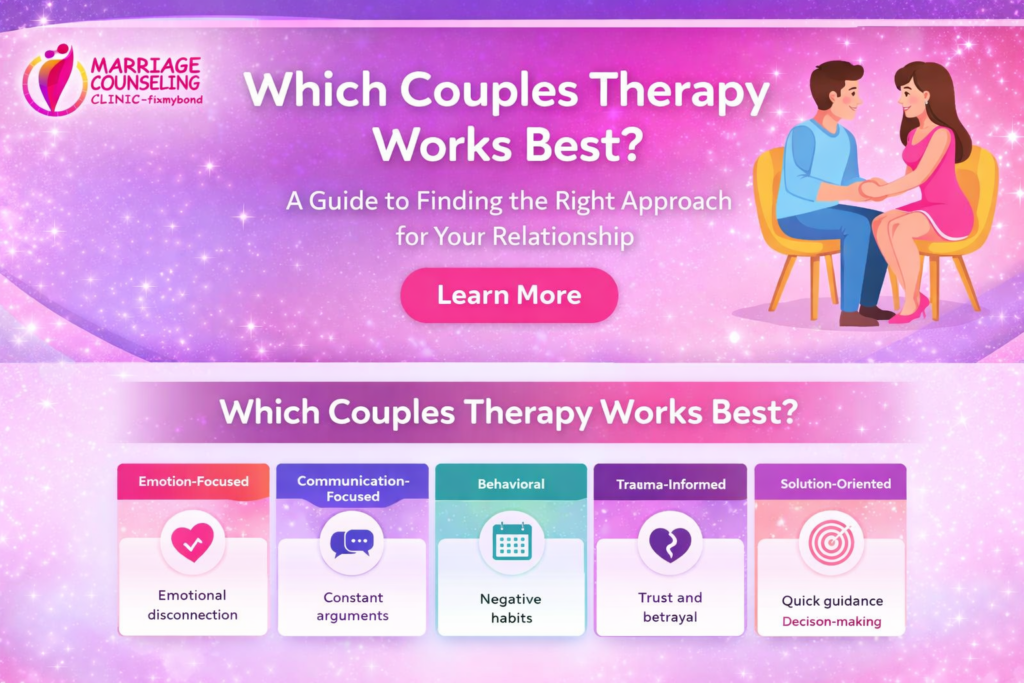
1. Emotion-Based Couples Therapy
Best for: Feeling unloved, emotional disconnect, and attachment insecurity Emotions rather than arguments are the primary focus of this strategy. Most of the time, couples fight over things like money, household chores, and family, but the real problem is emotional insecurity. One partner might think: Ignored
Couples benefit from emotion-based therapy: Recognize vulnerable emotions. Send your needs safely. Emotional receptivity rather than defensiveness This strategy can be very effective if your relationship is cold, distant, or emotionally disconnected.
2. Communication-Focused Therapy
Best for: Arguments that keep coming up, misunderstandings, and harsh language Despite their genuine love, some couples struggle to communicate. Critique, defensiveness, or silence quickly take over conversations. Therapy based on communication teaches: Skills for active listening De-escalation of the conflict respectable communication of needs Methods for emotional control If you’re looking for: Small disagreements escalate into major conflicts. One partner withdraws. You talk over each other or interrupt them. You feel ignored. The dynamics of a relationship can be significantly altered by learning how to communicate in a different way.
3. Behavioral Couples Therapy
Best for: Negative, repetitive patterns and habits Sometimes, behavior rather than emotion is the problem. Examples:
Not contributing to responsibilities Absence of effort avoiding crucial discussions Inadequate time management putting aside quality time Instead of analyzing emotions, behavioral therapy focuses on changing one’s actions. The couple works on: establishing clear objectives establishing healthy habits Promoting positive habits establishing responsibility Couples who want a change that is both practical and structured will benefit from this strategy.
4. Trauma-Informed Couples Therapy
Best for: emotional wounds, betrayal, past trauma, and trauma from infidelity If either partner has encountered: Childhood abuse Abuse of emotions Infidelity
Verletzungen of deep trust If so, conventional guidance on communication might not be sufficient. Therapy based on trauma focuses on: Spiritual security Building trust over time Managing stimuli Managing past suffering Patience, comprehension, and structured emotional support are necessary for trauma healing.
5. Solution-Oriented Couples Therapy
Ideal for: Couples who require immediate direction There are some couples who are not very upset. During a transition, they simply require clarity or direction, such as: Preparing for marriage New motherhood Relocation
Workplace stress Family or cultural conflict Solution-focused therapy focuses on the following: Clear goals
Tools of the trade Actionable strategies Sessions based on actions It’s more about moving forward than deep emotional history.
6. Pre-Marital Counseling
The best for: Married couples Therapy before a marriage is proactive rather than reactive. It helps couples talk about: Expectations regarding finances Roles in families Views from parents Intimacy
Conflict strategies Long-term objectives A lot of happy marriages start with well-organized advice before the wedding
7. Discernment Counseling
Ideal for: Couples who are unsure whether or not to stay together Traditional couples therapy may not work right away when one partner wants to leave and the other wants to stay. Counseling for conflict helps couples: Improve clarity Recognize their patterns. Choose whether to spend money on repairs. The objective is not forced reconciliation but rather making well-informed choices.
So, Which Type Is the Best?
What works best for couples therapy is based on: The extent of emotional suffering The regularity of disagreements How far trust has been shattered Your method of communication Your dedication to development There is no single solution. However, because they focus on the fundamental connection between partners, emotional and communication-focused therapies frequently result in the greatest transformation.
How to Know What Your Relationship Needs
Think about it: Are we emotionally distant? Are we constantly arguing over the same issue? Is there a loss of trust? Is it difficult for us to communicate with respect? Are we thinking about splitting up? The therapy will take a course based on your responses.
The Role of the Therapist Matters More Than the Method
The therapist’s experience, neutrality, and capacity to create emotional safety are even more important than the therapy style. A professional therapist will: Don’t pick sides. Encourage participation from all Keep sessions structured. Ensure that both partners are heard. A major factor in success is the therapist-couple relationship.
Online vs In-Person Couples Therapy
Online couples therapy is now preferred by many couples because it provides: Appropriate scheduling convenience of home Privacy
Having access to specialized counselors When carried out professionally, structured online couples therapy has been shown to be highly effective.
How Long Does Couples Therapy Take?
It varies according to: Quantity of problems The number of sessions a willingness to adapt Mental preparedness Within six to ten sessions, some couples experience improvement. Longer support might help other people. Consistency and effort outside of sessions are crucial.
Signs You Chose the Right Therapy Approach
You might observe: Conversations seem less heated. You have a better understanding Calming down communication Increases in emotional security Empathy is greater. You begin as part of a team. Although meaningful, progress may appear to be gradual.
Common Mistakes Couples Make
waiting until extreme resentment has set in assuming that therapy will “fix” their partner deciding to end a difficult session avoiding being vulnerable Not putting tools into use outside of sessions Therapy involves working together. Honest participation from both partners is required.
When Should You Seek Help?
If you and your partner are: Emotionally, you feel disconnected. Conflict can be tiresome and repetitive. There has been a loss of trust. Communication feels toxic
You are considering separation
You want to improve a relationship that is already healthy. Therapy is not a sign of failure. It is a sign of commitment.
Last Thoughts
The most effective form of couples therapy is not based on popularity or trends. Understanding the particular requirements of your relationship is the key. Emotion-based therapy is the best option if you need to reconnect with your emotions. Choose structured communication therapy if communication is the issue. Choose behavioral therapy if the issue is patterns of behavior. Select trauma-informed support if trauma is present. What really makes a person successful is: Willingness on both sides Sincerity from the heart Consistency
Assistance from professionals Relationships that are healthy require effort. Couples can reestablish trust, deepen their connection, and build a stronger partnership with the right therapy approach.